Patient Information

At the Oncidium foundation, we help people around the world access and understand Targeted Radionuclide Therapy (TRT) for cancer care.

Whether your medical team has already mentioned this therapy or you simply want to learn more, we hope this section gives you what you are looking for.

Click on any of the sections below to find out more.

What is Targeted Radionuclide Therapy for Cancer Care?

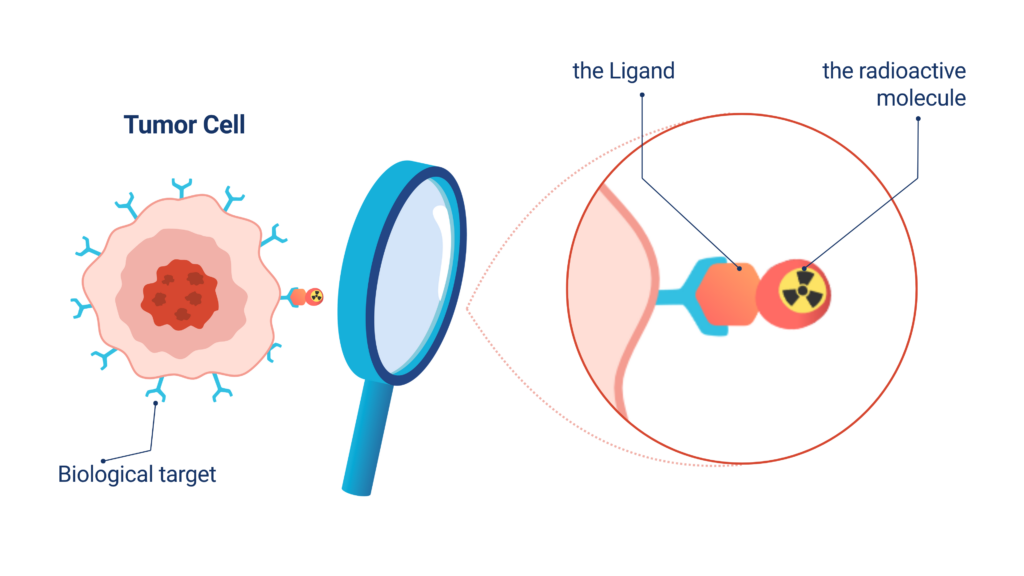
Targeted Radionuclide Therapy (TRT) is a type of cancer treatment. It uses a small amount of a radioactive medicine that travels through your body and attaches to dedicated cancer cells. Once attached, it delivers radiation right where it is needed, while trying to spare healthy tissue as much as possible.

Targeted Radionuclide therapy, Ligand and radioactive molecule on cancer cell

You may also hear Targeted Radionuclide Therapy (TRT) referred to as PRRT or Peptide Receptor Radionuclide Therapy, RLT or Radioligand Therapy, Radiopharmaceutical, Radiotheranostics or Molecular Radiotherapy or by specific treatment names such as Lutetium-177 DOTATATE, or Lutetium-177 PSMA

Why so many names?

This field is newer and fast-moving. Different hospitals, countries, and research groups developed their own terms before the field agreed on a common language.

At the Oncidium foundation, we align with expert guidance. Nuclear medicine experts have now agreed on Targeted Radionuclide Therapy (TRT) as the shared term, and it is the one we use throughout this section of the website.

How it works? See it. Treat it.  

TRT - How does it work?
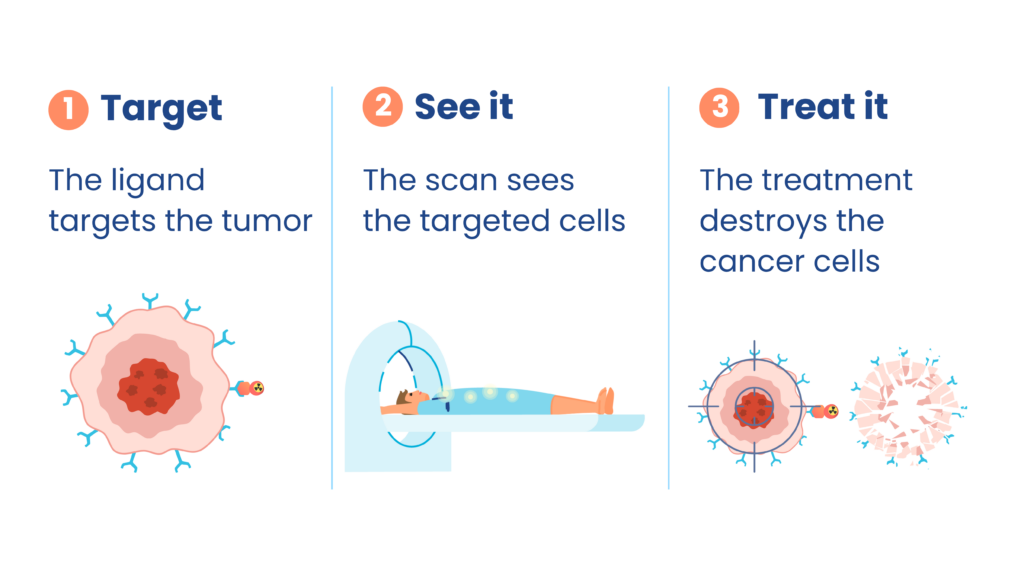
1. Targeting the tumor

The drug contains what is called a ligand, a targeting molecule that acts like a key: it’s designed to find and stick to the right “lock” (the biological target) on the cancerous cell’s surface.

Its role is to guide both diagnosis and treatment to the cancer cells, by identifying what makes these cells different from normal ones.

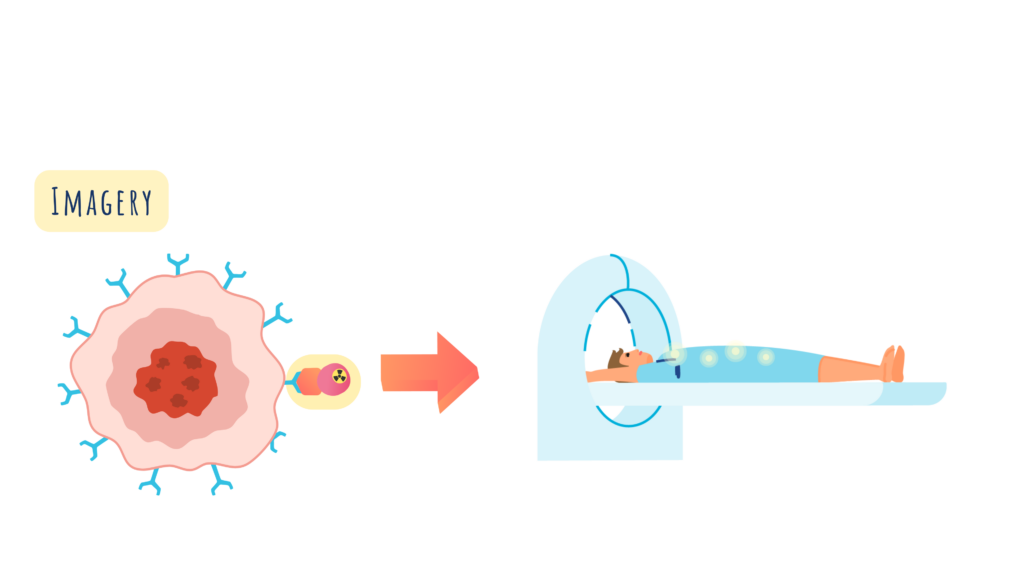
2. See it : The Imagery

A diagnostic radioligand tracer is administered by intravenous injection, followed a few hours later by a functional imaging scan.

The scans that are used are PET (positron emission tomography) and SPECT (single-photon emission computed tomography) scans. They are special types of imaging that use small amounts of radioactive material to show how tissues and tumors are working.

Unlike standard scans such as CT or MRI, which mainly show the body’s structure, these scans can confirm whether the tumor shows high “uptake” (meaning the tracer binds well to the cancer cells); if so, the patient may be considered a suitable candidate for the therapy.

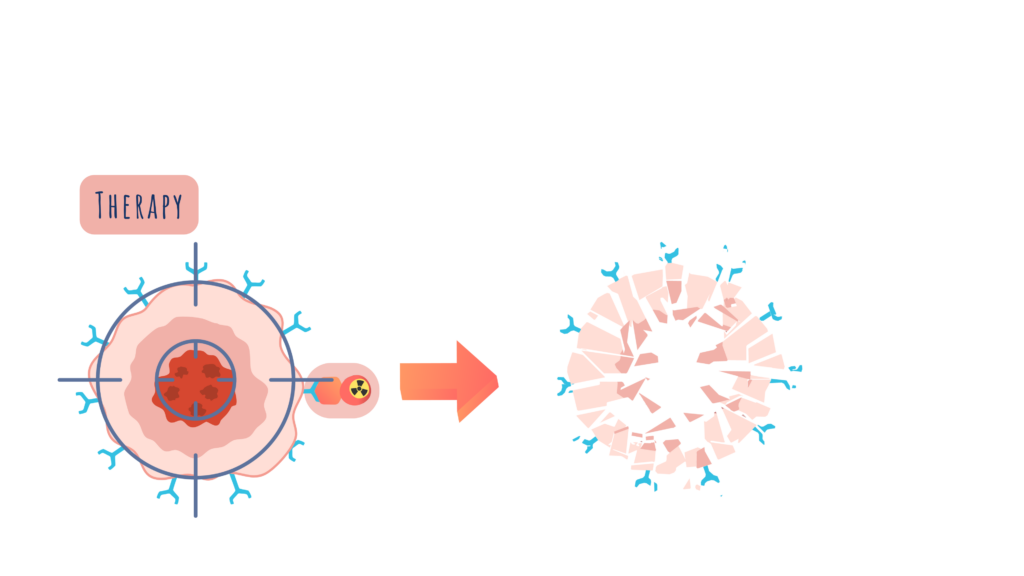
3. Treat it: The therapy

If the scan confirms uptake and that the patient is considered as a suitable candidate for the therapy, the same vector is used again, this time carrying a different radioactive component. Its role is to deliver treatment directly to the cancer cells, helping to destroy them while minimizing exposure to most healthy tissues.

Discover how Targeted Radionuclide Therapy works with the comic book of Mr Bind

Targeted Radionuclide Therapy Roadmap

Your guide to what to expect when TRT becomes part of your care.

Please note: this is a general guide to the steps you will follow. Your steps may look slightly different depending on where you live or where you are being treated.

Part of a bigger picture For those who are eligible, it is usually one part of a wider care plan, developed alongside an oncology/medical team If you're not sure whether radiotheranostics might be relevant to your situation, speak with your healthcare team

  1. 1

    Talking to your team about TRT

    Read

    This will typically follow a tumour board discussion. Your medical team will have agreed that TRT may be the right treatment for you at this stage.

    Access to TRT varies by country. Your team may need to apply for funding, or you may need to use your health insurance. This guide assumes access has been approved, including through Oncidium’s RLT Connect platform.

    Next, you will have a scan…

  2. 2

    Your scan

    Read

    This will typically follow a tumour board discussion. Your medical team will have agreed that TRT may be the right treatment for you at this stage.

    Access to TRT varies by country. Your team may need to apply for funding, or you may need to use your health insurance. This guide assumes access has been approved, including through Oncidium’s RLT Connect platform.

    • Prostate cancer: PSMA PET/CT (for example: ⁶⁸Ga- PSMA-11)
    • Neuroendocrine cancer: SSTR PET/CT (for example: ⁶⁸Ga- DOTATATE, ⁶⁸Ga-DOTATOC or ⁶⁴Cu-DOTATATE 

    This is the ‘SEE IT’ step.
    Blood tests are also required…

  3. 3

    Bloodtests

    Read

    You will have blood tests to make sure your body can clear any therapeutic surplus, meaning getting the greatest possible benefit from a treatment while keeping unwanted effects as low as possible.

    If all is clear…

  4. 4

    Getting ready for treatment

    Read

    If you agree to treatment and your blood tests cause no concern for the treatment, your team will plan and book your treatment sessions.

    Everything is now in place…

  5. 5

    Your first treatment

    Read

    After your treatment, a SPECT/CT scan is usually done within 24 to 72 hours. In some centres this can be done on the same day as treatment. It uses the same medicine you have just received to confirm it has reached the right places in your body.

    This is the ‘TREAT IT’ step.
    Your treatment continues…

  6. 6

    More treatment cycles

    Read

    Most people have 4 to 6 rounds of treatment, roughly 6 to 8 weeks apart. Many centres carry out a scan with PET/CT or SPECT/CT midway through the treatment to check how the treatment is working on your disease.

    Once your course is complete…

  7. 7

    Check-up after treatment

    Read

    You will have blood tests and scans to see how your body has responded. Your team will let you know how often and when these will happen.

    Almost there…

  8. 8

    Rest,your treatment 
is complete !

    Read

    This course of treatment has now finished.

Which cancers can Radioligand Therapy treat?

Targeted Radionuclide Therapy is already used to treat some types of cancer.
Learn how effective it is and how it works for each specific cancer.

+950

Therapy centers

Find your nearest treatment center!

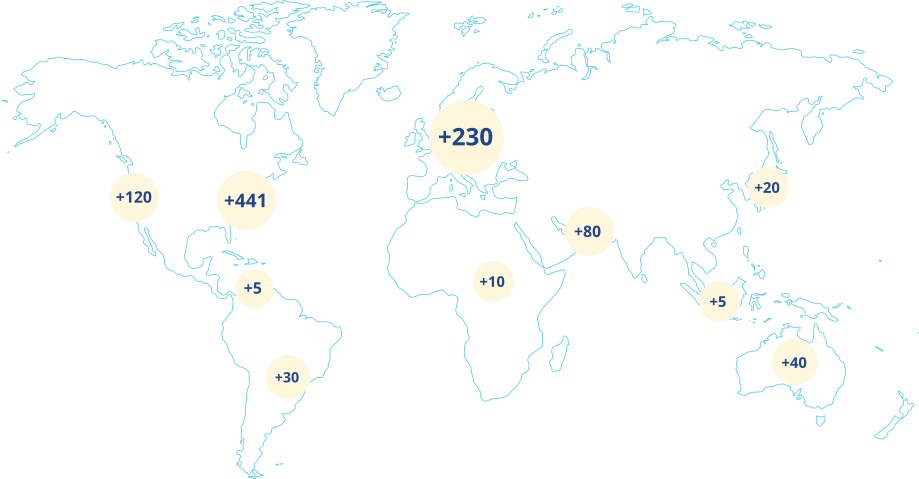
With over 950 therapy centers worldwide, this interactive global map is designed to help you find where radionuclide therapies are available. Explore the map to locate specialized centers providing these advanced treatments.

Find a treatment center
Map of targeted radionuclide therapy centers

Treatment
Donation

RLT-connect: A global treatment program for patients in financial need.

RLT- Connect is a collaborative platform established by the Oncidium foundation to facilitate access to Targeted Radionuclide Therapy (TRT) for cancer patients who cannot afford it, as the treatment is not yet reimbursed.

Read more

Clinical Trials

At the Oncidium foundation, we believe clinical trials open the door to tomorrow's cancer therapies. 

We provide people living with cancer with the latest information on radiotheranostics and guide them to treatment centers and clinical studies that match their diagnosis. 

By connecting patients with these state-of-the-art trials, we help advance new breakthroughs and ensure they can access the very best care options available. 

Read more

Stories of hope

Discover inspiring stories of people living with cancer and learn about radioligand therapy is helping them regain control over their lives.